The Subtle Art of Exploitation
The Myth of Shared Success
The Subtle Art of Exploitation
The creator economy thrives on extracting value from others. The lesson is to protect yourself, collaborate fairly, and stop buying into the myth that if one wins, we all win.
Defining Exploitation
The Collins Dictionary defines exploitation as “the use or utilisation for profit.” After more than fifteen years working across the creative industries, I can say with confidence that there has never been a single job I have done for someone else where I have not, at some point, realised that I was being exploited to a degree I did not understand at the time. When you finally recognise your worth, when you truly understand the value of what you bring, it can be a painfully shocking revelation.
The truth is, exploitation exists everywhere. Whether you are in a creative field, a corporate job, or running your own business, every financial exchange carries some level of exploitation. The question is not whether it exists, it is how much of it you are willing to accept.
The level of exploitation you can live with will determine how far you can go.
The Myth of Shared Success
The creative world often disguises exploitation as togetherness. We are taught to believe that if one of us wins, we all win. But that belief hides a harder truth.
In most industries, especially ours, shared success is rarely shared ownership. The wrap parties, the group photos, the posts that say “we did it” create the feeling of unity, while the real profits and rights are quietly written into contracts elsewhere.
When a project ends, the cheque goes to the top while the credits go to the bottom. You are thanked, applauded, and reused or replaced. That is the myth of shared success: emotional recognition without material reward.
Until we see through that illusion, we will keep mistaking celebration for equity and exposure for payment. If everyone feels like they have “won”, no one questions who actually owns the win.
Understanding this is not cynicism. It is awareness. Because once we see the imbalance clearly, we can start to rebuild the creative ecosystem in a way that is transparent, ethical, and genuinely collaborative.
And just as importantly, it allows you to make your choices with your eyes wide open. To understand the landscape you are stepping into, and decide what level of exploitation you are willing to accept.
Knowing the game you are playing means you can choose how to play it. Because awareness is not rebellion. Awareness is power. And power used ethically is how we begin to change the system from within.
Creative Exchange
Take the average full-time worker on a £30,000 salary. They give up 40 to 60 hours a week of their life in return for stability, structure, and a few perks. That is not freedom, that is a trade-off. And that trade-off is the socially accepted version of exploitation.
In creative spaces this becomes sharper and more personal. Producers, directors, and even fellow artists often end up using the time, talent, or energy of others to achieve their goals. It is not always malicious, but it is still extraction. It is still taking something valuable.
Some people dislike the word exploitation because it carries dark associations such as child labour, colonial greed, and human suffering. But in a capitalist system, everything is transactional. The level of exploitation you can live with will determine how far you can go.
Flipping the Dynamic
I am not built to exploit. I lead with heart. I create with heart. And yet, to survive and to build, I have had to learn that the system rewards those who understand the exchange, not those who ignore it.
So what is the alternative? How do we create without becoming the very thing we dislike? We flip the dynamic. We move from blind exploitation to conscious collaboration. We enter partnerships where both sides know exactly what is being given and received.
That means honesty. It means saying, “This is what I need,” and allowing the other person to decide whether that exchange feels fair. It means removing manipulation and false promises from the table. Because when you can see the wolf has teeth, you know what to expect. But when the wolf hides under sheep’s clothing, when charm disguises control, that is when creators get hurt.
Collaboration and Coercion
Collaboration is a form of exploitation. You are using someone’s time, skill, or resources to achieve your goal, and they are using yours to achieve theirs. The difference lies in consent, transparency, and reciprocity. When those things are present, it is collaboration. When they disappear, it becomes something darker.
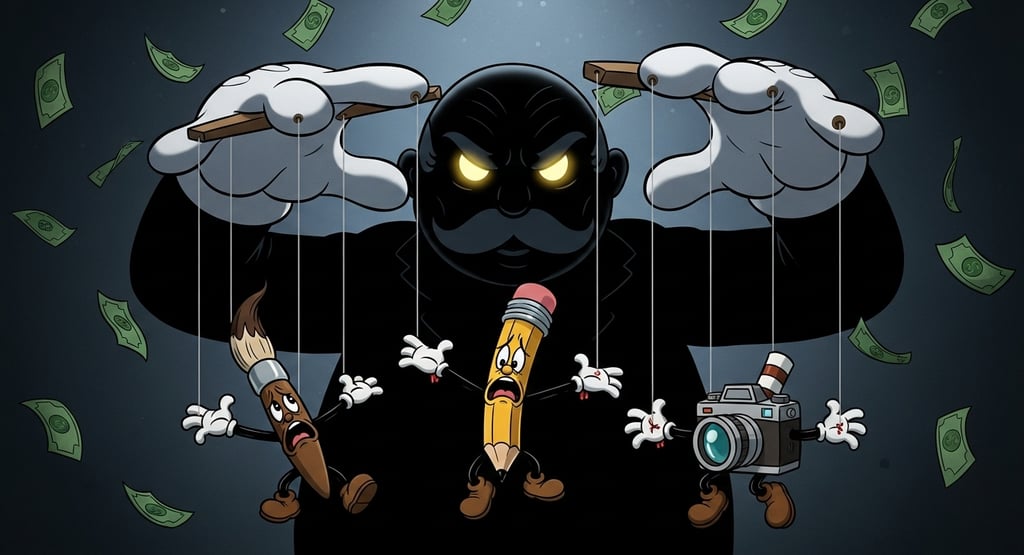
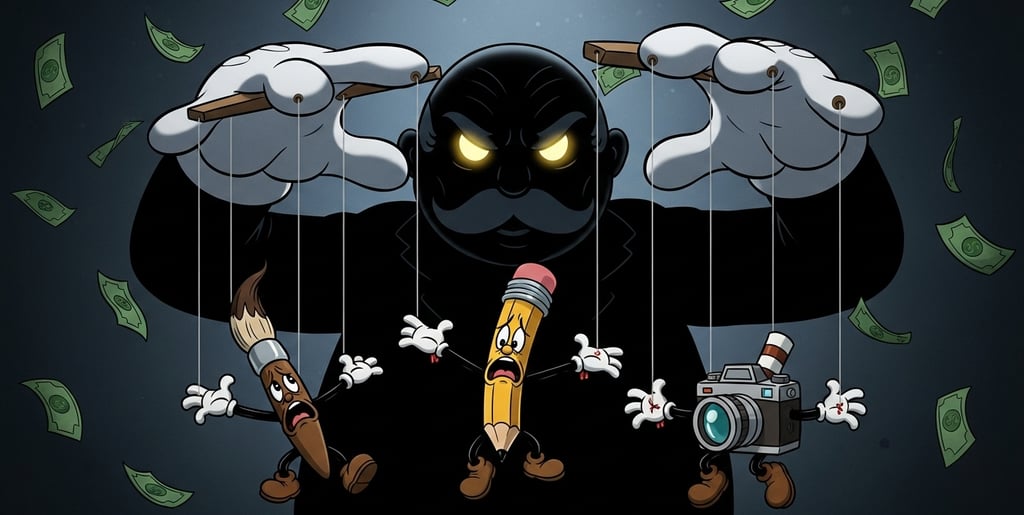
When exploitation is hidden behind manipulation, charm, or control, when one side knowingly takes more than they give, that is no longer collaboration. That is coercion.
Coercive exploitation is when someone uses emotional leverage, false hope, or power imbalance to extract what they want while convincing you that you agreed to it. It is not partnership. It is not mentorship. It is indentured creativity, modern-day servitude dressed up as opportunity.
The real art, the subtle art, is learning to spot that line. To say no when the energy shifts. To walk away when transparency fades. To protect your art, your time, and your peace.
Our Ethos
In a creative economy built on exchange, everyone uses someone. But only those who understand boundaries, consent, and mutual benefit can keep their soul intact in the process.
At We Make Heads Turn, we believe in transparent collaboration. We believe in fairness, respect, and creative integrity. We believe in mutual exploitation, not in its darker sense, but in its truest one: the shared use of each other’s gifts to build something bigger than either of us could build alone.
That is our ethos.
That is the art of collaboration.
That is The Subtle Art of Exploitation.
Connect
Join our community and elevate unheard voices.
Support THE BUILD
info@wemakeheadsturn.co.uk
© 2025. All rights reserved.